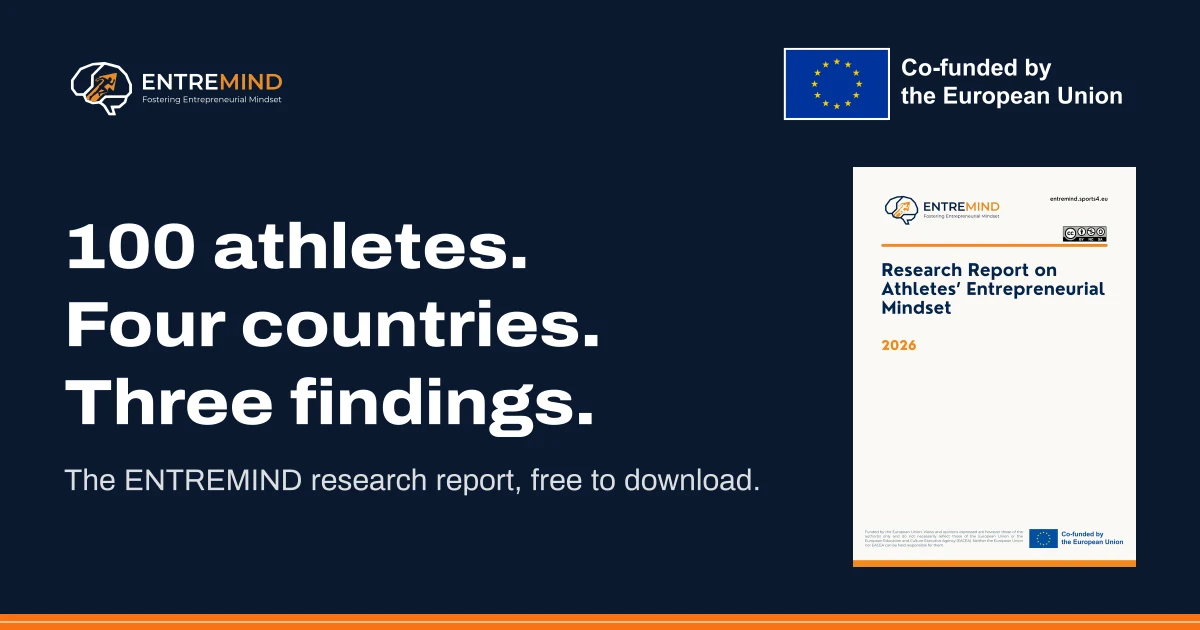
Athletes in Türkiye showed the highest interest in entrepreneurship of the four partner countries in our research, and their main barrier was economic instability, cited by three in four. Informal side businesses came up more often in Türkiye than in any other partner country. You can read more in our posts on how the barriers differ by country and on making a side business official.
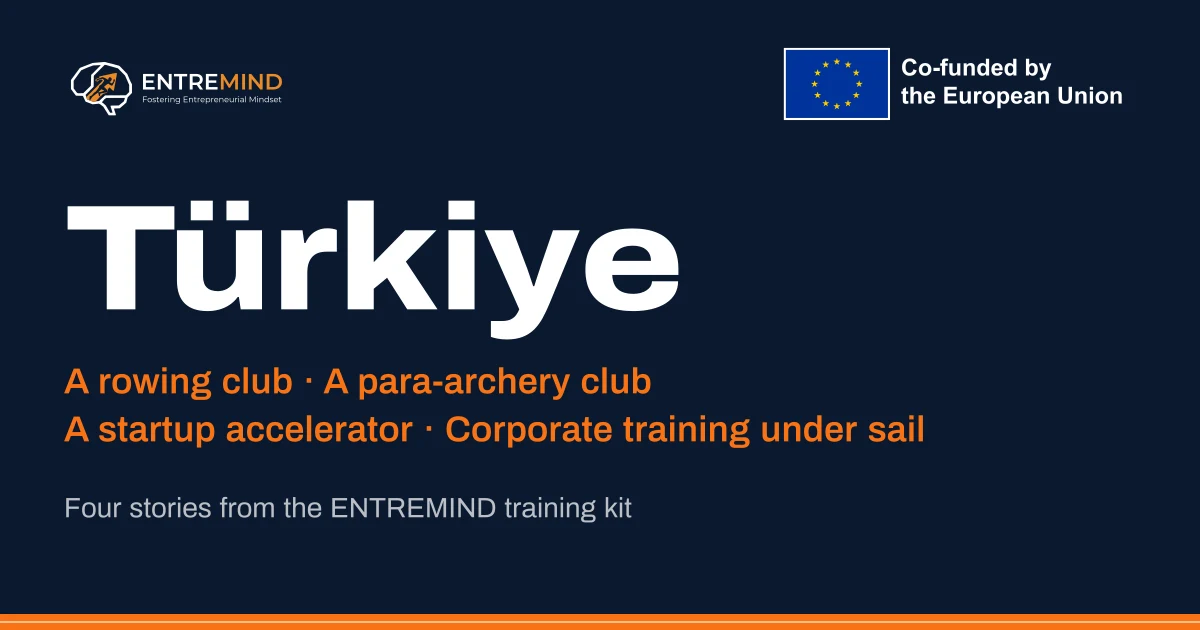
The four Turkish stories in our training kit show four shapes a venture can take: two clubs, an accelerator and a training company. The stories are built from public sources, and the athletes are not involved in the project.
Ozan Yelaldı: serve the ones who turn up
Ozan Yelaldı took up rowing at 14, joined the national team at 15, and ended his competitive career at 18. He studied coaching at Kocaeli University’s Faculty of Sport Sciences, then coached at two clubs and with national teams. In January 2021, more than 20 years after his last race, he founded Bursa Rowing Club.
His plan was to develop national-level rowers. The first members were people who simply liked being on the water. Today the club has 130 active members, among them lawyers, engineers, software developers, teachers and hairdressers, who row out into Gemlik Bay before dawn. The kit’s lesson: your first customers may not be the ones you had in mind, so serve the ones who turn up.
Oğuzhan Polat: start in the year you stop
Oğuzhan Polat was on Türkiye’s Paralympic archery team from 2009 to 2019 and competed at the 2012 Paralympic Games. He stopped competing in 2019 and founded his own club, Gazi Okçuluk Kulübü, in the same year. It trains athletes with disabilities. Since then its athletes have won 85 cups, six have reached the national team, and the club has produced a world champion aged 14.
It is hard work with no obvious commercial model: athletes with disabilities face barriers of access, equipment and transport that most clubs are not built for. Two of the kit’s three lessons stand out. Start in the year you stop, because the gap between retiring and starting is where momentum dies. And the path you walked is itself something you can offer.
Sinan Güler: join a network before you build one
Sinan Güler played for Türkiye’s national basketball team and captained it. His first business was an online sports shoe shop. He then joined an established angel investment network, and later founded the Sports Startups Accelerator Program, which links sport with the startup world and is now his main focus. He has described one simple test for any product: would he use it himself as a customer?
The kit’s lesson: join an existing network first, then build your own.
Güray Zünbül: two fields are harder to copy than one
Güray Zünbül started sailing at 13, represented Türkiye more than 500 times, and in 2000 won the first world championship title in Turkish sailing. He had planned to become a mechanical engineer. After seeing that Turkish sport lacked sport psychology, he studied psychology instead, graduating from Koç University in 2007. His company, Co.Sailing, runs corporate training and coaching with sailing as the classroom.
The kit’s lesson: two fields combined are harder to copy than one field done well.
Read the full stories
For Zünbül, the kit notes that public sources do not cover the commercial side of the business. For Yelaldı and Polat, the stories describe the hard part; for Güler, the kit reasons from how early-stage investing works rather than from a documented setback. You will find all four in the training kit, with sources for every fact and two reflection questions at the end of each.
ENTREMIND is an Erasmus+ Sport partnership co-funded by the European Union (project 101229842).