“The system in Belgium is good for studying, definitely. But nobody teaches you how to be an entrepreneur. They basically teach you how to be a good employee.”
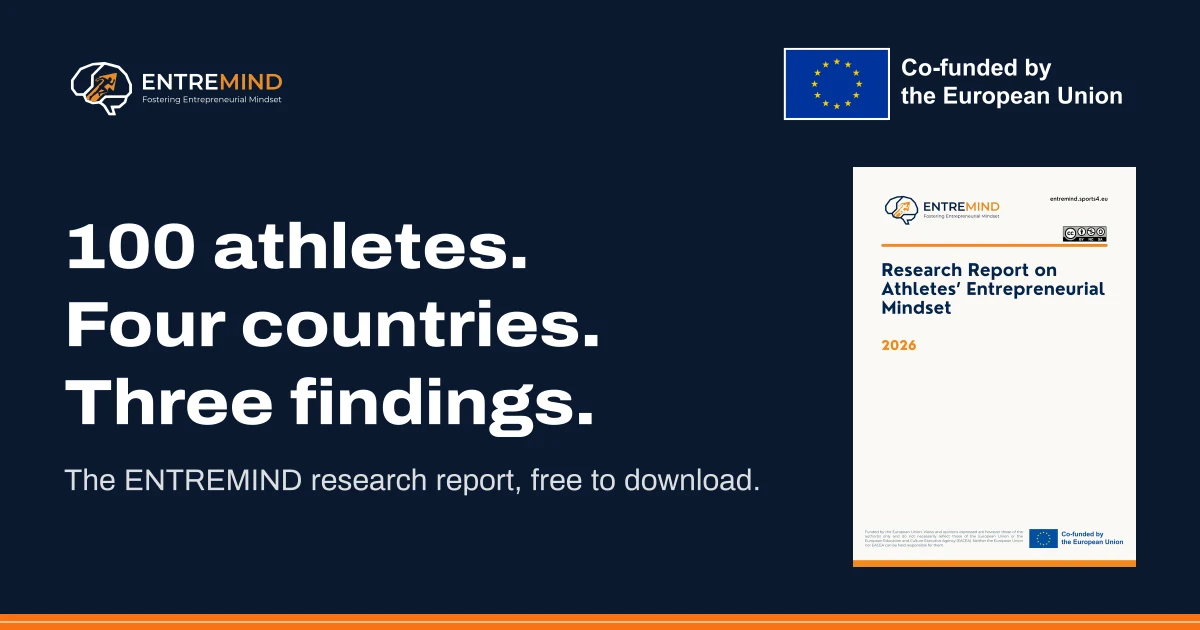
That is how a field hockey player in Belgium described the support around them, in an interview for our research report. Athletes in the other partner countries said much the same.
The support exists. It is just not built for athletes
Universities, innovation agencies and startup programmes are all there. But the athletes in our research found them designed for people with conventional careers, not for someone who trains most days, travels to compete and plans life around a season. A biathlete in Norway put it like this:
“There are many support systems in Norway, like Innovasjon Norge. But they’re not really tailored to athletes. Walking into a startup hub… it feels alien to me. Like I don’t belong there.”
Athletes asked for practical help, and the report concludes it should come in language that speaks to them, at hours they can actually make.
What federations could do
The report makes three suggestions for national sports federations:
- treat entrepreneurship as a core life skill inside existing dual career programmes, not as a separate track;
- work with incubators to offer office hours for athletes, at flexible times;
- consider a certificate for basic financial and legal competence.
What universities could do
For universities, the report suggests:
- adding entrepreneurship tracks to dual career programmes, which so far have focused on study rather than business;
- running business workshops in the evenings and at weekends, when athletes can attend;
- offering athletes internships in startups, not only in large companies.
What athletes can do
And for athletes themselves:
- start exploring careers during your peak years, not when retirement is close;
- start small, with freelancing, consulting or content creation while you still compete;
- find a mentor among athletes who have made the move, because shared experience often builds trust more effectively than advice from business professors alone.
Some built the missing piece themselves
Several of the athletes featured in our training kit built the kind of institution the kit found missing. Oğuzhan Polat, a Paralympic archer, founded a club for athletes with disabilities in the same year he stopped competing. Sinan Güler, a former captain of Türkiye’s national basketball team, founded an accelerator programme for sports startups. Birgit Skarstein co-founded a foundation for disability inclusion in sport and working life.
What comes next
The project’s supporting kit, which is being built now, will list incubators, funding programmes and mentors in the partner countries, for people whose week is not nine to five. If this barrier sounds familiar, the assessment tool asks about it too, and points you to where to start.
ENTREMIND is an Erasmus+ Sport partnership co-funded by the European Union (project 101229842).