
“I make around 1.2 million NOK now playing handball. And trying to replace that with a regular job or, you know, a startup… it’s really hard. I sometimes call it the golden handcuffs problem.”
That is how a handball professional in Norway put it in one of the interviews for our research report. It puts a name to something many athletes in the interviews described: a good income from sport can make the next step harder, not easier.
Why a good salary can hold you in place
Starting a business usually means earning less for a while. On a good sporting salary, that dip does not feel like an investment. It feels like going backwards. A WorldTour cyclist in Belgium described the same fear:
“But when I stop, I go from being, I don’t know, specifically rich to generally poor. That’s how it feels.”
A volleyball professional in Poland pointed to the other half of the problem, the years that went into sport instead of a career on paper:
“I have a decade of trophies, but I don’t really have a CV that means anything outside of sport.”
The report found this barrier strongest in Norway and Belgium, and present in Poland too.
What helps
The report’s answer is practical: plan the move the way you would plan a season.
- Know your runway. Work out how long you could live on your savings and a smaller income, before you have to.
- Expect the dip. Plan for the lower income of a business launch before it happens, not while it happens.
- Build a bridge. Keep one income running while the next one grows.
- Start small, and start now. Freelancing, consulting or creating content can run alongside an active career, often under a simple structure such as working as a sole trader, without giving up the salary you have.
Start while sport still pays
The athletes featured in our training kit show the same thing from the other side. Several of them started building their next career before the sporting one ended. Mariusz Pudzianowski founded his transport company in 1997, more than a decade before his strongman career ended. Kim Clijsters opened her tennis academy between her second and third retirements.
The kit sums it up in one line: if you are still competing and telling yourself you will start afterwards, you are choosing the harder version.
Check where you stand
The assessment tool asks about what holds you back, including whether your sport income makes it hard to accept earning less for a while. If that comes out high, it points you to a safe start: low-risk ways to begin and planning your financial runway.
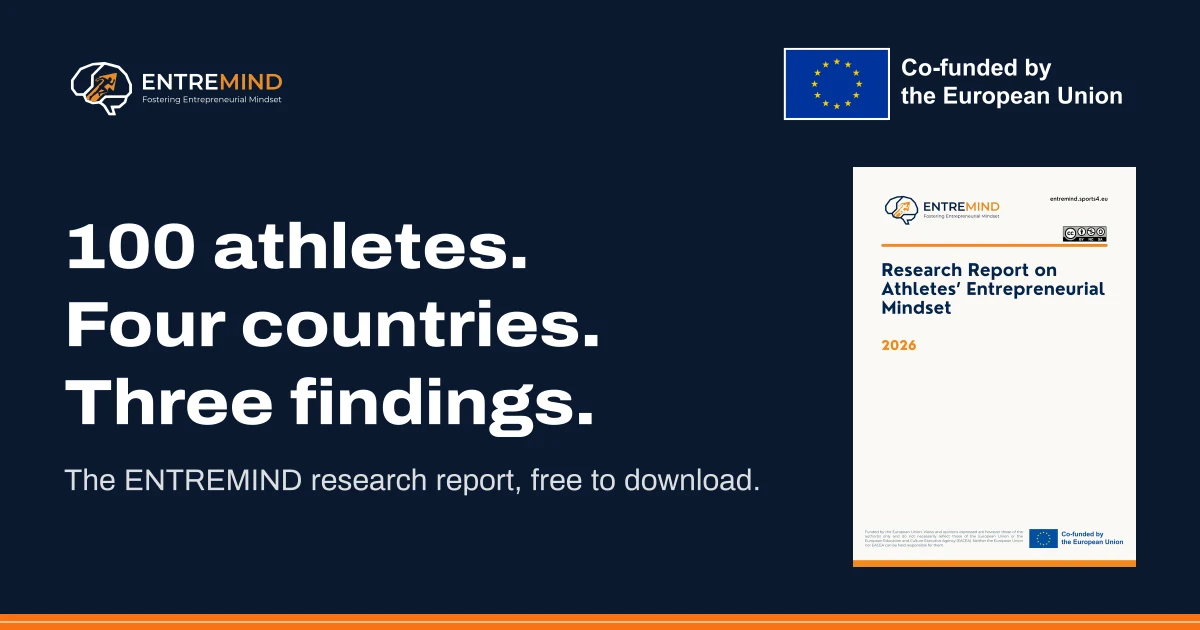
Read more about what the athletes told us in the research report.
ENTREMIND is an Erasmus+ Sport partnership co-funded by the European Union (project 101229842).